

Alexis Built One of the Most Original E-Skateboards—Now He's Taking It Global
After perfecting the board and closing out a successful Kickstarter, Alexis is now shifting his focus to scaling production and expanding globally. I recently rode the board with him in Copenhagen—yes, it lives up to the hype—and heard about the rollout he's planning.
Behind the Story



We share stories of partners who turn ambition into action—hoping to inspire others or offer the practical know-how to do the same. This month, we spotlight Alexis, the Founder of Liquid Skateboard, based in Copenhagen.
What began as a passion project has become the most authentic electric skateboard in the $4B+ market growing at 12.1% CAGR. Along the way, Alexis has stayed loyal to the experience of riding a traditional skateboard—bringing in technology only where it enhanced the natural feeling of cruising. Recently, I had the chance to ride his board with him in Copenhagen, and the experience was unlike anything else.
Here's how Alexis went from prototype to production—and now sets his sights on the world.
The Beginning
After years of riding regular boards and testing nearly every electric skateboard on the market, Alexis kept running into the same issues: a remote that felt unnatural, going from 0 to full speed without pushing (which felt like cheating), and having his feet glued onto the board. These things took away the freedom that makes skateboarding feel alive.
So Alexis started building his own prototypes. Dozens of experiments later, he found the right mix of power delivery and board behavior that matched the feeling he had been chasing for years.
From that point on, friends asked to borrow his boards and strangers got curious—and that's when he realized this could become something real. A board he would actually want to ride every day, and maybe others would too.
I just wanted something
that felt real under my feet.
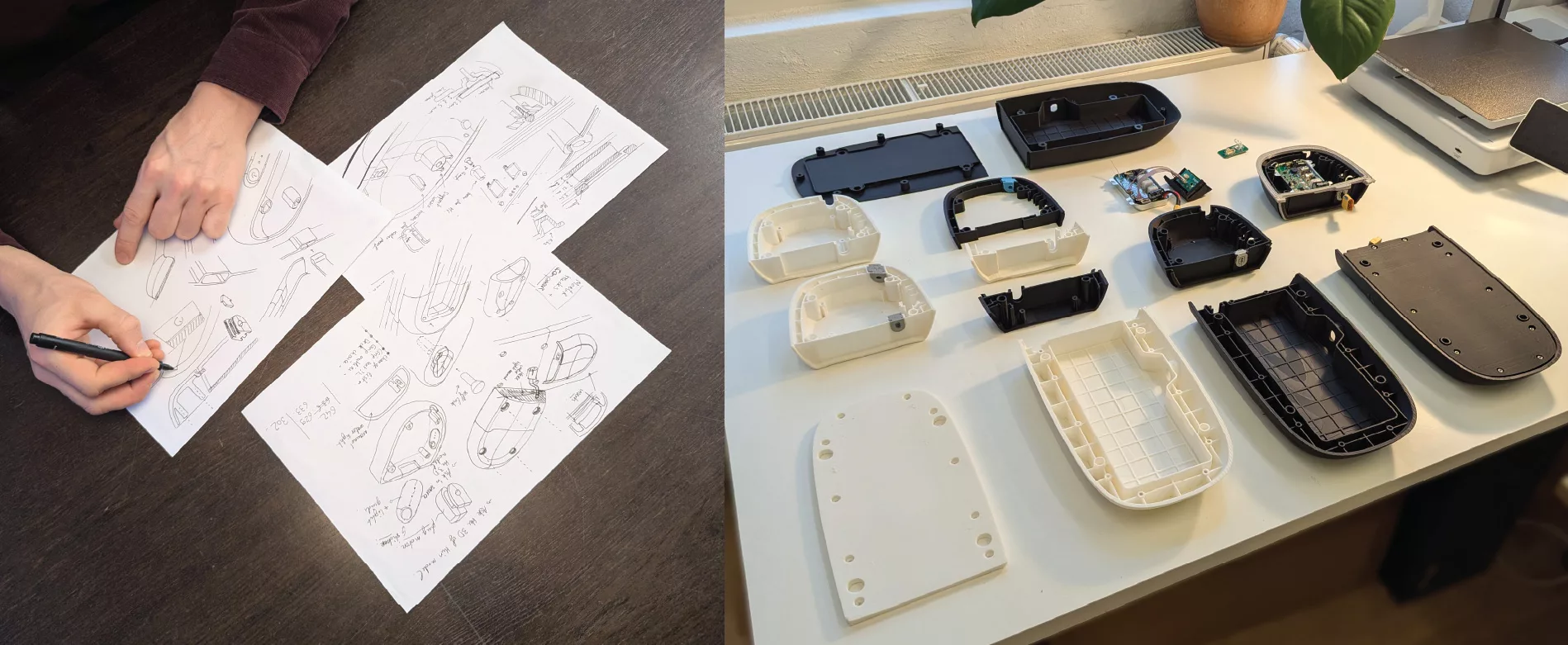
Early design iterations
Qava's Industry Analysis
Alexis never wanted to study detailed market charts or industry data. He didn't need to. His perspective came from something more real: watching how people moved through cities, how skaters actually rode, and what he wished existed, but couldn't find.
He saw that skateboarding surged during COVID and later cooled off, but one thing never changed — the need for simple, intuitive, urban mobility. People will always want a way to move that feels natural, lightweight, and free. Most electric skateboards deliver power and features, but not the feeling.
When the Qava team later reviewed findings from a REANIN industry report, the data simply confirmed Alexis' instincts had been on point.
Electric Skateboard Market
Global market size, growth rate, and structure
Market Summary
- Study period
- 2025–2031
- Base year
- 2024
- CAGR
- 12.1%
- Market size 2024
- $4,094.56M
- Market size 2031
- $9,108.49M
Market Growth
Market Structure
Major Players
Source: ReAnIn Electric Skateboard Market Report, 2025
Dialing In Performance
Before Liquid could reach more riders, Alexis had to turn a working prototype into something that wasn't just awesome to ride, but could also be built reliably at scale. That meant shifting to the essential work of building a real manufacturing capability.
The year following his successful Kickstarter, Alexis set up his manufacturing processes, developed new tools from scratch, tested suppliers, refined assembly methods, and learned every step of the supply chain from the inside out. Every adjustment, every new fixture, every batch test got the board closer to being repeatable — not just good once, but good every time.
It wasn't about chasing extreme specs, but about getting the fundamentals right. Over time, the board settled into consistent, reliable performance:
- ⚡️ ~22 km/h (~13.5mph) top speed
- 🔋 ~12 km (~7.5 miles) of real-world range
- 🪶 Lightweight build that was easy to carry; and
- 🛹 A ride that felt natural and similar to traditional skateboarding.
Reviews didn't appear overnight. But they did start coming in after the first 200 Kickstarter boards had shipped — real riders putting the board through real-world use, confirming that the work behind the scenes had paid off.

Liquid Skateboard review on YouTube
Scaling Up
Moving from research and development into true scale is one of the hardest steps in any hardware journey. Alexis had the engineering locked in, but bringing an electric skateboard to the world requires more than a great product—it requires the operational backbone to build it consistently, move it reliably, and get it into the hands of riders across different markets.
Scaling up meant shifting from hands-on craftsmanship to a dynamic system of suppliers, manufacturing partners, logistics networks, and retail channels. It's a completely different capability: standardizing parts, formalizing processes, qualifying vendors, planning inventory, coordinating freight, meeting certifications, and building partnerships that can support growth without compromising the feel of the board.
Manufacturing Partners
Distribution Partners
Retail Partners
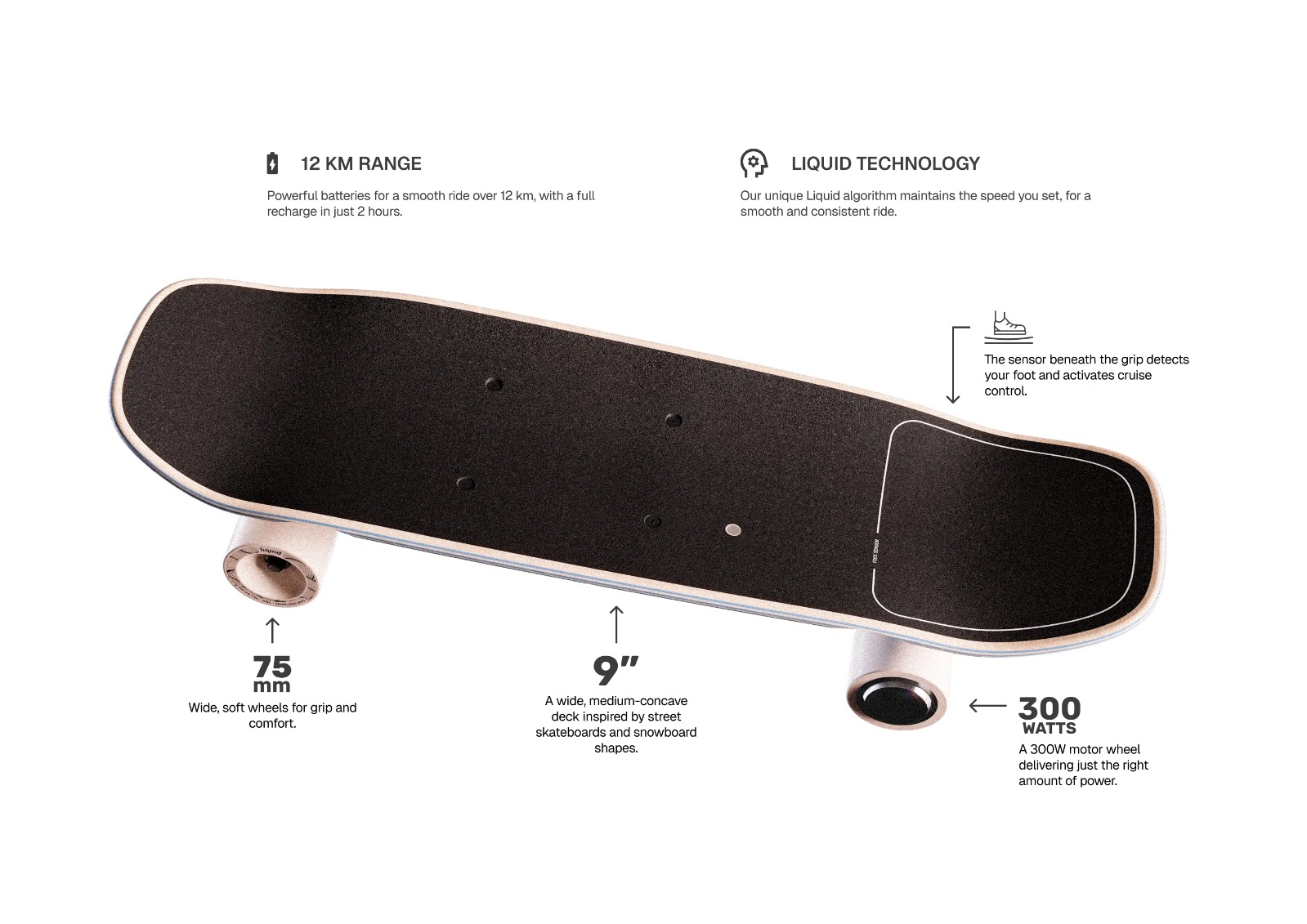
Liquid components & materials
Going Global
Going global is one of the most exciting steps a company can take—but it's also one of the most complex. New markets introduce new regulations, new logistics paths, new testing standards, and entirely new expectations from customers. What worked at home rarely works the same way abroad, and the gaps become obvious fast.
But complexity isn't the enemy—it's the gateway. Each new region opens up fresh demand, new types of customers, and distribution channels that simply don't exist in a single-market model. For hardware, especially, global expansion can transform a niche product into a category-defining one.
The key is having the right systems in place. When your manufacturing, distribution, and retail foundations are structured for scale, the complexity stops being a burden and becomes an advantage. With the right partners and infrastructure, going global isn't chaos—it's a massive multiplier for growth.
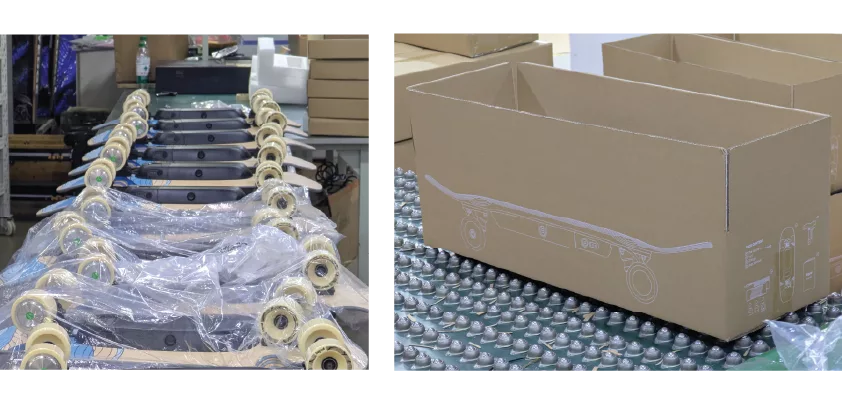
Preparing for scale
Turn ideas into something.
Liquid Skateboard continues to scale because Alexis built smart.
Start your journey today with Qava.